
Incense has a prominent place in Orthodox Christian worship. Its use is rooted in the worship described in Holy Scripture and continues as a visible and fragrant expression of prayer, reverence, and holiness.
Incense and prayer
The rising smoke of incense is often associated with prayer ascending to God. This image appears in the Psalms and in the Book of Revelation. During Orthodox services, incense therefore accompanies prayer and helps express the sacred character of worship.
What is incensed?
The priest or deacon may incense the altar, icons, Gospel Book, holy objects, clergy, and the faithful. This is not because the material objects or people are worshiped. Incensing expresses honor toward what is dedicated to God and recognizes the image of God in the people gathered for worship.
The censer
Incense is normally burned in a censer, also called a thurible. Many Orthodox censers are suspended by chains and may have small bells attached. The form and decoration of censers vary among Orthodox traditions.
A biblical practice
Incense appears throughout biblical worship, especially in the Old Testament Temple, and is also present in the heavenly worship described in Revelation. Orthodox Christianity understands its liturgical use as part of this continuing biblical language of worship.
More than atmosphere
The fragrance of incense can make an Orthodox service memorable, but its purpose is not simply to create a mood. Together with icons, candles, chanting, vestments, and sacred movement, incense engages the senses and reminds worshippers that prayer involves the whole person.
For this reason, incense remains a natural part of Orthodox liturgical life in parishes throughout the world.


|
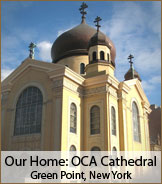
Established with the blessing of V. Rev. Fr. Wiaczeslaw, Rector of Orthodox Christian Cathedral of the Transfiguration of Our Lord (NY). |